
Autumn Mental Health: Why Your Mood Shifts with the Leaves

About 20% of U.S. adults experience mood shifts as the days grow shorter, and around 5% develop full-blown Seasonal Affective Disorder.

About one in five adults notice their mood dip when the days grow shorter, and around 5% experience full Seasonal Affective Disorder. That’s millions of people who feel the season not just in the trees outside their window, but in their bodies.
The first sign of fall isn’t always the leaves. Sometimes it’s the way your eyelids feel heavier in the morning, or how your shoulders hunch against the chill, or that extra slice of bread you crave with dinner. Autumn doesn’t just change the world around us—it reshapes the rhythms inside us too.
The Emotional Weight of Shorter Days and Autumn Mental Health
When the Sun Slips Away
In the early weeks of shorter days, people often feel a quiet heaviness settle in. It can look like fatigue, slower movements, or headaches that arrive with the gray skies. Ancient farmers noticed this long before doctors gave it a name, adjusting their days around the sun’s retreat. Today we understand that as light fades, serotonin dips and our body clock gets fuzzy, leaving us dragging our feet even when we’ve done nothing unusual.
Sleep and the Season
Why Mornings Feel Harder
Sleep gets tangled up in the season too. Melatonin—the hormone that tells your body it’s time to rest—lingers longer in the darker mornings, which explains why beds feel magnetic in October. You might wake groggy, struggle to focus your eyes, or even notice your digestion feels sluggish.
The Jolt of the Clock Change
When daylight savings rolls around, some people describe it as a hangover without the party: foggy, heavy, and out of step. Doctors regularly see sleep complaints spike in November, proof of how tightly our bodies are tied to light.
The Craving for Comfort
Food as Seasonal Medicine
A bowl of pasta on a rainy October night feels almost medicinal, and science says it’s not just comfort—it’s chemistry. As daylight shrinks, hunger hormones shift, pushing us toward carbs and sweets. That cozy meal can leave you content for an hour, only to crash harder later, your body riding the rollercoaster of blood sugar highs and lows. It’s part biology, part ritual, and entirely human.

When Energy Turns Restless
Anxiety in the Autumn Air
Not everyone slows down. For some, fall brings restlessness instead of stillness. Anxiety sharpens in the shorter days, showing up as a racing heart, tight shoulders, or nights spent staring at the ceiling. Therapists often call September their “busy season,” and it’s not hard to see why—school schedules, heavier workloads, and the holidays loom, stacking pressure on top of the body’s shifting chemistry.
The Autumn Uplift
Inspiration in the Crisp Air
But there’s another side to this story: the autumn uplift. Plenty of people come alive when the heat breaks and the leaves burn gold. Cooler air steadies sleep, routines bring order, and the body softens into a slower, calmer rhythm. Surveys suggest most people actually feel more inspired in fall than any other season. The physical sensations here are different: steadier energy, fewer restless nights, even a calmer heartbeat as the nervous system eases in cooler weather.
How to Care for Yourself in Autumn
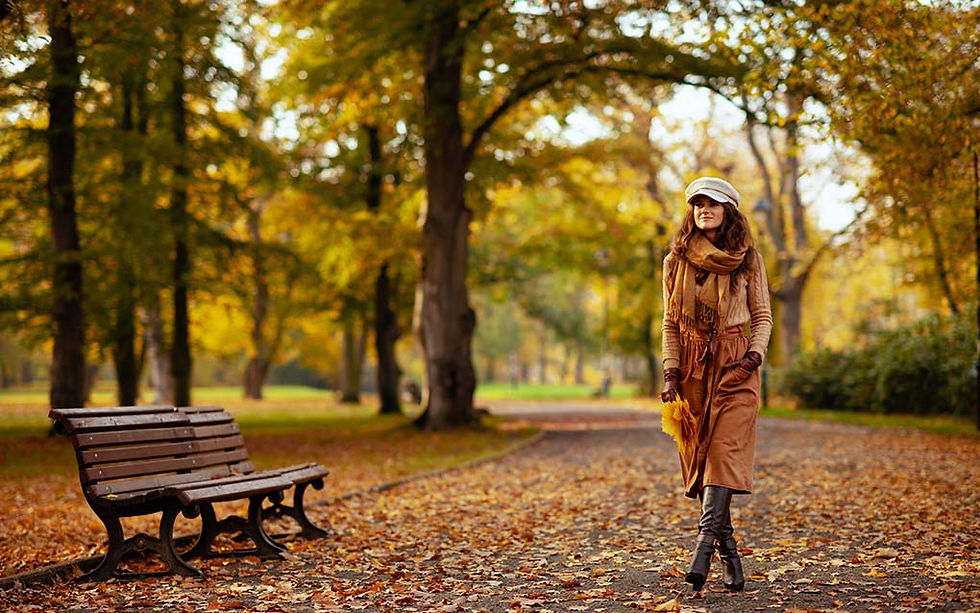
Autumn is more than a backdrop—it’s an experience written across both mind and body. Some of us feel heavy, some restless, some renewed. The shifting light touches our moods, our cravings, our sleep, our very posture. It’s not weakness; it’s the earth’s rhythm tugging at our own.
The good news? There are small, gentle ways to care for yourself as you move through the season:
Seek the light. Step outside in the morning, even for ten minutes. Natural light is the best reset button for your body’s clock.
Honor sleep. Keep a steady bedtime and wake time, even when mornings grow darker. Your body loves rhythm.
Eat with awareness. Enjoy the comfort foods, but balance them with protein, fiber, and plenty of color on your plate.
Move with the season. Walk among the leaves, stretch by the window, breathe the crisp air—movement grounds the body and mind.
Lean into coziness. Candles, warm drinks, soft blankets—these rituals aren’t frivolous. They signal safety and calm to your nervous system.
So when the days shorten and you notice yourself changing, remember you’re not imagining it. You’re simply moving with the season, the same way the trees let go of their leaves.
Autumn mental health is a reminder that fall doesn’t just happen outside—it happens in us too. And that’s exactly how it’s meant to be.
Enjoyed this post? Subscribe to get the latest updates, comfort tips, and exclusive offers directly to your inbox! 👇



Comments